
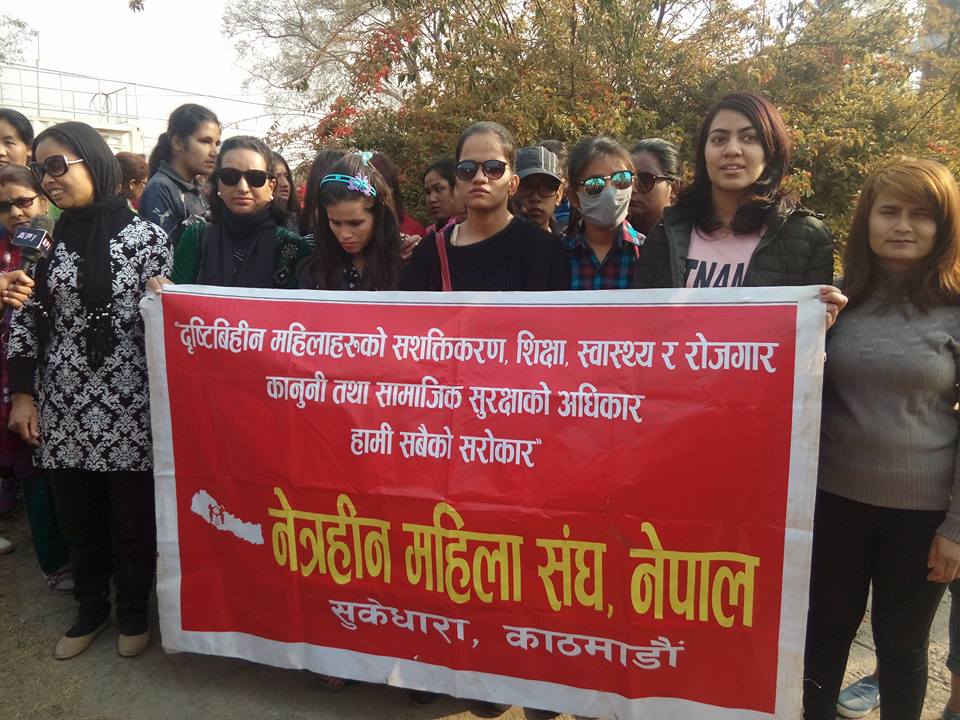
Priority 1: Organizational Development
The organization focuses on empowering visually impaired women by establishing committees at the federal, provincial, and local levels. This network includes seven provincial committees and ten district branches in Illam, Sunsari, Mahottari, Kathmandu, Chitwan, Nuwakot, Kaski, Rupandehi, Surkhet, and Kailali. Additionally, the organization has set up paralegal committees at the district level to address women’s issues and improve access to justice at the local levels.
Priority 2: Advocacy and Lobbying
The organization advocates for women with disabilities by updating key laws and policies to make them more inclusive of women with disabilities. It produces documentaries and conducts research to support advocacy, creates accessible Information, Education and Communication (IEC) materials and jingles, uses media and social networks to advocate for the urgent issues of women with disabilities. Our organization’s work is guided by a strategic plan for 2023-2025.
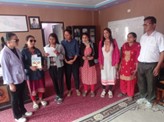
Handing over the delegation paper to Hon’ble Minister Ms. Sumana Shrestha, Ministry of Education, Science and Technology.
Priority 3: Capacity Building
The organization provides capacity building training to blind and visually impaired women/girls including women with disabilities in organizational management and development, advocacy skill development, case management, gender facilitator development, personality development, legal literacy and sexual and reproductive health rights. It also offers capacity-building workshops and interaction programs for local representatives and bureaucrats on disability-inclusive development and disability-related laws and policies.
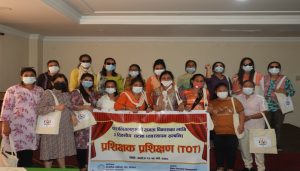
Case Management Training for Capacity Building of Paralegals
Priority 4: Access to Justice
Since its inception, BWAN has actively been working to prevent violence and discrimination against women with disabilities and enhance their access to justice. It has set up and trained paralegal committees at the local levels as well. So far, 30 women with disabilities have received legal assistance and support for issues such as divorce, property rights, and compensation for sexual violence. The organization also works with judicial committees and other bodies at all levels to ensure effective and timely justice, provides legal literacy and human rights training, and raises awareness on child abuse and importance of self-defence skill in schools.
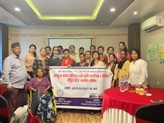
Training on Gender-based Violence for Women with Disabilities (Tilottama Municipality)
Priority 5: Intersectionality, Gender, and Women
Based on article 6 of UNCRPD, 2006, BWAN advocates for gender equality and the empowerment of women and girls with disabilities, addressing their heightened vulnerabilities to discrimination and violence. The organization tirelessly works to ensure these women fully enjoy their human rights, by providing them with essential knowledge and skills for their independence. BWAN’s policies and structures reflect the principle of inclusion by representing marginalized groups, including visually impaired girls and women considering their caste, ethnicity, diverse gender identity, geographical location and cultural differences.
Priority 6: Socio-Economic Empowerment
To enhance socio-economic empowerment and ensure dignified life for women with disabilities, BWAN has been launching various activities for financial and social inclusion. This organization manages endowment funds such as Kamala Smriti fund, Late Kiranbaba singh fund, Hari Prasad Sharma Poudel fund, emergency fund with which BWAN has already disseminated scholarships and educational materials to 230 children with visual disabilities, and it has distributed white canes to around 500 visually impaired individuals.
Operation of rehabilitation service
The organization operates rehabilitation shelter at Gauriganj, Chitwan, with the capacity of accommodating 15 women with disabilities, especially those affected by violence. With the financial support of federal and Bagmati province’s government, few women with visual disabilities have been provided with vocational training, home science training, psychosocial counselling service and legal literacy, Sexual and Reproductive Health and Rights (SRHR) training, Braille literacy etc.

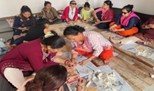
Vocational and Entrepreneurship Training